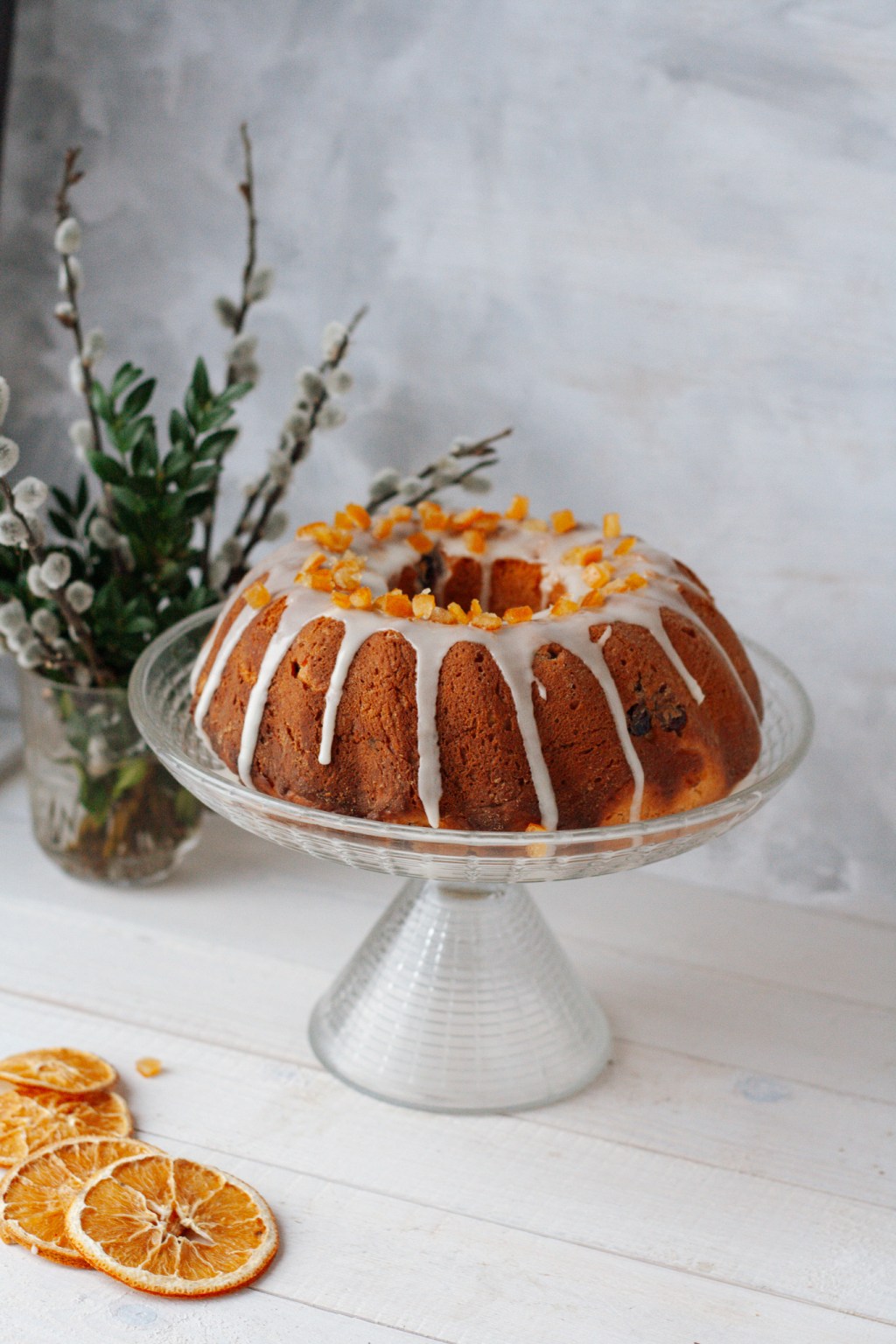
This one is a true classic: the babka of all babkas. I always feel a little nervous before baking anything with yeast. You never really know whether it’ll rise beautifully or just… not. But there’s something magical about a freshly baked Easter cake, the smell filling the kitchen and the warmth that comes with it.
In Poland, people can be quite opinionated about yeast. Many swear that fresh yeast is the only proper way. The truth is, instant yeast is definitely more convenient since it just sits there waiting in your cupboard, and it doesn’t require making a starter. Maybe it’s a nostalgia of making a fresh yeast face mask in my teens, but there is nothing like the smell of fresh yeast. Internet swears “it provides a faster, more robust fermentation for a lighter, airier, and more fragrant dough”. But use whichever works best for you.
This babka uses an old-fashioned method where part of the flour is scalded with boiling milk. It helps the cake stay soft and wonderfully moist. The result? A beautifully rich, aromatic babka that’s just impossible to resist… I’m really trying not to eat the whole thing myself!
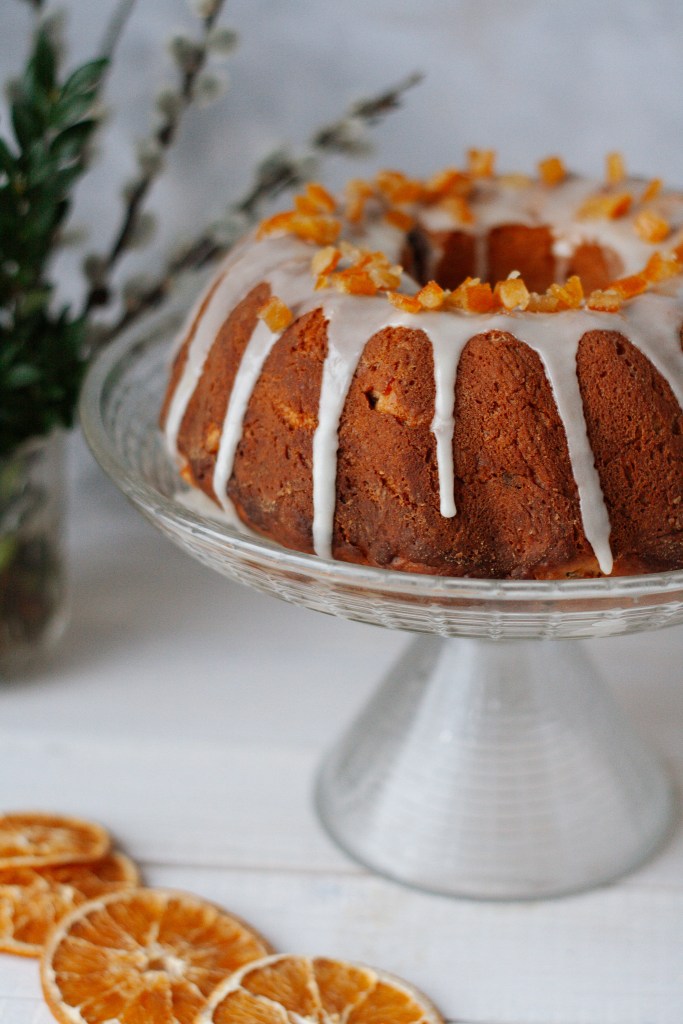
Polish Bundt Cake (babka ucierana)
A soft, buttery Polish Bundt cake with a delicate crumb and a hint of lemon and almond. A simpler version of the classic Easter Babka
Cake
- 250 g all purpose flour
- 25 g fresh yeast
- 3/4 cup milk
- 4 egg yolks
- 80 g granulated sugar
- 2 tsp vanilla sugar
- 80 g butter
- 1/4 cup rasins
- 1/4 cup candied orange peel
- pinch of salt
Glaze
- 100g (1 cup) icing sugar
- 1-2 Tsbp orange juice
- 2 Tsbp candied orange peel
Cake
- Make the starter: In a small bowl, combine the yeast, 1 teaspoon sugar, 1 tablespoon flour, and 1/4 cup warm milk. Stir to combine, cover, and set in a warm place until bubbly and doubled in volume, about 15 minutes.
- Prepare the flour mixture: In a small saucepan, bring the remaining milk to a boil. Pour the hot milk over half of the flour (about 2 cups) in a large bowl. Stir well until smooth, then let cool to lukewarm.
- Combine base dough: Once the starter has risen and the flour mixture has cooled slightly, mix them together until smooth. Cover and let rise in a warm place for about 15 minutes.
- Prepare the yolk mixture: In a separate bowl, beat the egg yolks with the sugar and vanilla sugar (or extract) until thick and pale.
- Make the dough: Add the yolk mixture and a pinch of salt to the dough. Gradually add the remaining flour while mixing or kneading until the dough becomes smooth and elastic. Slowly pour in the melted, cooled butter while kneading. Finally, fold in the raisins and candied orange peel if using.
- First rise: Cover the dough and set aside in a warm spot until it doubles in size, about 30–40 minutes.
- Shape and bake: Transfer the dough to a greased medium Bundt pan. Let it rise again for about 20 minutes while the oven preheats to 350°F (180°C). Bake for 40 minutes, or until golden brown and a skewer inserted in the middle comes out clean.
- Finish: Let the babka cool in the pan for 10–15 minutes, then turn it out onto a wire rack.
Glaze
- Whisk the icing sugar with orange juice until smooth and thick.
- Drizzle over the cakes once they have cooled slightly.
- Decorate with candied orange peel.
 Magda's Cauldron
Leave a comment